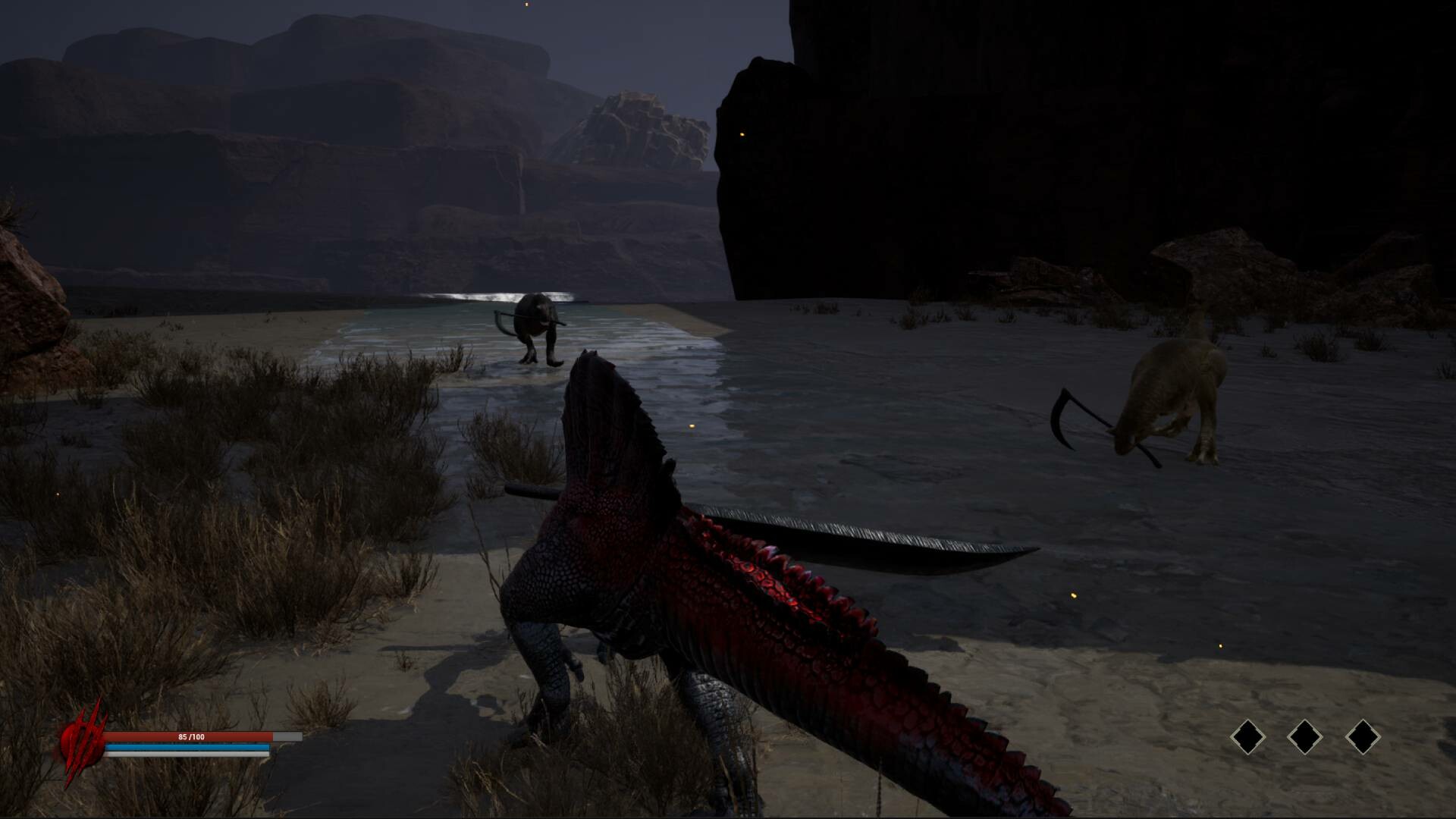
This brief uses information visible on the official Steam listing as of July 15, 2026. Exact inputs, timings, stats, item names, and encounter outcomes stay unpublished until they can be tested after the July 23, 2026 release.
What the official listing confirms
Dinoblade is a single-player action RPG starring a young Spinosaurus wielding a Great Sword. Steam describes a combat system built around skills, abilities, chained combos, dodges, rolls, parries, and weapons hidden across the world. Rival dinosaurs can also carry weapons.
That is enough to prepare a learning order, but not enough to publish a finished walkthrough. The store page does not currently give exact input bindings, stamina rules, invulnerability windows, combo strings, damage values, or upgrade costs.
- Playable role
- Young Spinosaurus
- Signature weapon
- Great Sword
- Confirmed offense
- Combos, skills, abilities
- Confirmed defense
- Dodge, roll, parry
A safe first-session practice order
- Read the in-game bindings first. Confirm keyboard, mouse, and controller inputs inside the release build instead of using pre-release guesses.
- Test movement before committing to attacks. Note turning, acceleration, camera behavior, lock-on options if present, and how quickly movement can be cancelled.
- Record the basic attack sequence. Use an early, low-pressure encounter to identify which inputs chain and which leave the Spinosaurus exposed.
- Isolate each defensive action. Practice parry, dodge, and roll separately before combining them with attacks.
- Add one skill or ability at a time. Compare purpose, resource use, recovery, and positioning rather than judging only visual impact.
- Repeat against a second enemy type. A habit is not reliable until it survives a different attack rhythm.
Build a combat notebook, not a tier list
Pre-release tier lists would be speculation. A better launch-day record separates observations from conclusions. For every action, write down what triggered it, what the animation showed, whether movement or attack could follow, and what changed against another enemy.
| Field | What to record | Why it matters |
|---|---|---|
| Input | Exact binding shown by the launch build | Prevents copied or outdated control advice |
| Commitment | When movement or another action becomes available | Reveals which attacks are safe to test first |
| Resource | Any visible cost or cooldown | Shows whether an action can be repeated |
| Result | Damage, stagger, displacement, or no clear effect | Keeps visual spectacle separate from function |
What remains unknown before release
- Exact keyboard, mouse, and controller layouts.
- Whether any defensive action grants invulnerability frames.
- How stamina, cooldowns, or other combat resources behave.
- How weapons, skills, and abilities are unlocked or upgraded.
- Which enemy attacks can be parried, interrupted, or avoided.
Do not memorize a pre-release combo sheet. Confirm the final tutorial, settings, and move behavior in the retail build first.